
Best Tourist Attractions in South Korea – A country full of cultural, historical and natural tourism like South Korea has many interesting tourist attractions. Aside from the obvious tourist attractions including the great city of Seoul, the country boasts open spaces that offer extraordinary natural beauty characterized by rock formations, green grasslands, and dense forests.
Overall, the country has a rich history, where various rulers and kingdoms have dominated throughout the ages. Their reign is still visible in the ruins and restored palaces scattered throughout the country. South Korea has an interesting cultural landscape to highlight; The country is rich with festivals, cultural events and delicious food. idnslot
15. Ganghwado Island
Located in the West Sea, Ganghwado Island is full of history. It has been occupied since prehistoric times and even enjoyed a period when it was the capital of Korea in the 13th century. In the 19th century, the island was used strategically to defend itself against the French and Japanese. In addition to the historical sites, Ganghwado Island offers impressive views, with several walking trails around the island; including Mount Manisan with its expansive sea views. Only 90 minutes from Seoul, the island is close to the North Korean border and connected to the mainland by a bridge, making it very easy to access. americandreamdrivein.com
14. Pocheon Art Valley
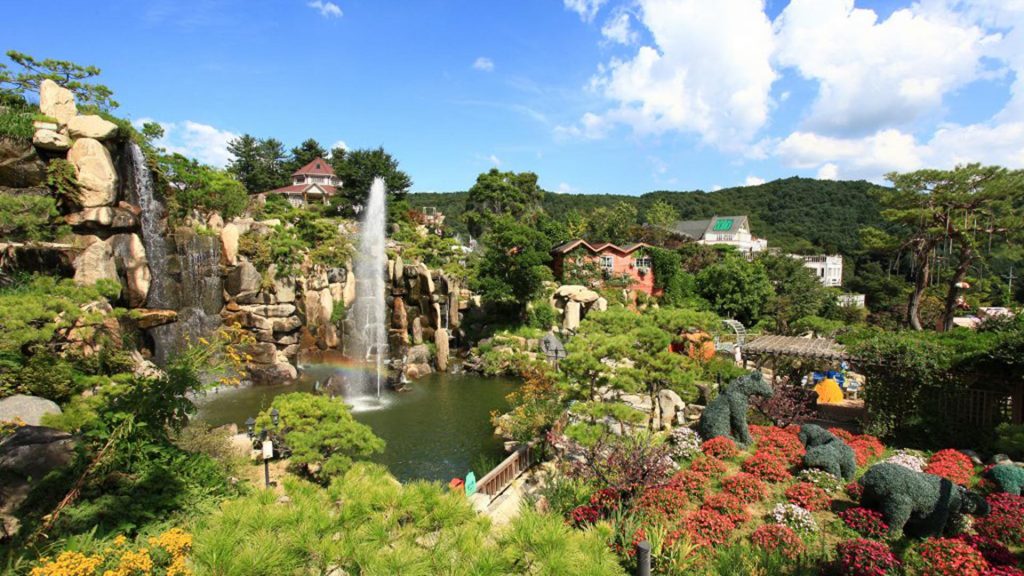
This area near the city of Pocheon was once a mine that functioned for the public. However, in Pocheon’s first environmental restoration project, the quarry was transformed into a beautiful park. The turquoise lake sits in stark contrast to the steep cliff face, and is visited by thousands of tourists every year. There is an open stage located next to the water where the arts center sometimes holds performances, with various events held annually, as well as daily art workshops.
13. Seoraksan National Park
Seoraksan National Park is a rugged landscape of sharp rocks and windswept pine trees. There are crystal clear streams and rivers that flow through the park’s valleys, providing hydration for the 2000 plus animals that live within its boundaries. This area is very popular for hiking, with marked trails of varying degrees of difficulty. Near the park entrance, visitors are greeted by a large Buddha statue, located at Sinheungsa Temple. Occasionally, hikers can hear monks in the distance as they explore. There are many food and drink options within the park boundaries, but they tend to be more expensive than dining facilities outside the park.
12. Bulguksa Temple
Gyeongju Bulguksa Temple was originally built in 528, but has undergone a number of renovations and expansions throughout history. Just outside Busan, the temple was of great importance to many dynasties. The complex consists of many buildings with intricate carvings and statues and harbors some of South Korea’s most important national treasures, such as the Sinheungsa and Dabotap pagodas. The park is impressive all year round, but it is even more stunning when the cherry blossoms are in bloom. It’s best to visit with a guide, who will bring the sights to life with fairy tales.
11. Jindo Sea Parting
South Korea has its own modern version of the famous Biblical story of Moses. Every year, visitors from all over the world flock to Jindo to witness this natural phenomenon of the ‘parting of the seas’. However, it is not as magical as it first appears; Natural bridges are the result of an annual accumulation of gravel and sand collected by high tide. In total, the sea section is 2.8 kilometers long, and at low tide, 40-60 meters wide. A number of interesting exhibitions and programs take place during the festival; including parades and cultural events.
10. Jeonju Hanok Village
The streets of Jeonju Hanok Village are lined with street vendors and restaurants bringing traditional dishes to Jeonju. One such dish is Jeonju bibimbay; it was considered a royal dish during the Jeonju dynasty. Besides the culinary aspect, the city is famous for its many hanoks: traditional Korean houses that pay great attention to the position of the house. The ideal hanok will feature mountains in the back and a river in the front. They usually use the courtyard to trap heat inside the house, especially the floor, as Koreans traditionally sit on the floor to eat and entertain.
9. Gamcheon Culture Village
Colorful, multi-story houses that look like the sea characterize Gamcheon Cultural Village in Busan. Before 2009, Gamcheon was a slum area; home to refugees from the Korean War. However, various government agencies are undertaking initiatives to redevelop the area as a tourist attraction and artistic center. Thus, cities receive funds to beautify their cities. Artists flocked to the area and now art lives on every corner, whether it’s outdoor sculptures or street art. Today, the best way to experience the city is to lose yourself in the colorful alleys of this unique city.
8. Boryeong Mud Festival
Once a year at Daecheon Beach, the dirtiest festival in South Korea takes place. The mud at the Annual Boryeong Mud Festival is believed to have special mineral properties. Every year it is brought to the beach by the truckload from the nearby Boryeong mud flats. The festival started in 1998 to promote cosmetics that use Boryeong mud in their products. Since then, the event has exploded. Every year millions of people visit for the two-week affair. Some of the most popular events took place this past weekend; including Mud Prison, mud skiing, and mud wrestling.
7. Boseong Tea Garden
The beautiful, rolling hills of the Boseong Tea Fields are the only open fields in Korea, and just beg for a photo. There are many walking paths and viewpoints where you can enjoy the beauty of the green gardens and watch skilled workers select the finest tea leaves. Tea is an integral part of Korean culture and you can experience a traditional Korean tea ceremony while you are here. This is a great way to learn about Korean culture and get a chance to taste fresh tea too. Before you leave, don’t forget to check out the beautiful bamboo forest on the outskirts of the fields.
6. Hallasan National Park
Hallasan National Park is home to South Korea’s highest mountain: Mount Hallasan. Traditionally, Mount Hallasan is called Mount Yeongjusan, which means ‘a mountain high enough to attract galaxies’. This park is located on Jeju Island, South Korea. There are trails suitable for every fitness level winding around the area. Even the climb to the top of Mont Hallasan is quite relaxing, and suitable for intermediate climbers. This mountain was once an active volcano; at the peak, you can find evidence of this in the form of a stunning crater lake.
5. Hwaseong Fortress
This magnificent fortress is a true testament to Korea’s unique history and military power. Built to surround the city of Suwan by King Jeongko between 1974 and 1976, it has received many battle scars since then. King Jeongko built the fort in honor of his father, who was killed by his grandfather. The complex has an elaborate palace, nearly six kilometers of fortified walls, and various gate towers. Every autumn, the Suwan Hwaseng Cultural Festival takes place; featuring reenactments and other cultural events and exhibitions.
4. Huwon Secret Garden
Changdeokgung Palace in Seoul was the main residence for a number of powerful monarchs and their royal families throughout history. It is one of the best-preserved palaces in South Korea today. However, Huwon Secret Garden is one of the stars of this property. This large garden has a great variety of plants, trees, streams, lotus ponds, pavilions and seating areas. Some of the trees on the property are more than 300 years old. The garden was given its name because it has an air of mystery about it; it was a place where no one except the royal family was allowed to enter without permission.
3. Namiseom Island
Namiseom Island, part of the larger Gapyeong region, is covered in beautiful natural scenery. It enjoys distinct seasons and is a very popular destination for domestic tourism. The half-moon island resulted from the creation of the Cheongpyeong Dam, which separated the land from the rest of the river. The island is named after the famous general Nami who was buried here in the 17th century. Apart from the surreal views and historical references, the island is famous for its delicious fried rice cakes.
2. Gyeongbokgung Palace
Located in the heart of Seoul, Gyeongbokgung Palace is one of South Korea’s most iconic buildings. The magnificent palace was completed in 1395. However, over the years, various rooms and other structures were added to this extraordinary building. Two museums within the palace walls include the Korean Museum and the Korean National Palace Museum. There are still a number of ongoing restoration efforts aimed at restoring this extraordinary building back to its former glory.
1.DMZ
The demilitarized zone between North Korea and South Korea is one of the longest borders in recent times. For some who visit the area, the DMZ zone is the only glimpse of the mysterious and brutal country, North Korea, they will get. There are various viewing platforms from the South Korean side looking north towards North Korea. The lines bordering each country were decided at the end of the Korean War as part of the Korean Armistice Agreement. This area is often used as a place for self-reflection: to reflect on the state of our political system and the freedoms we currently enjoy. Guided tours are available at the DMZ, which explain in detail the political and social atmosphere of each country.
News
Berita Teknologi
Berita Olahraga
Sports news
sports
Motivation
football prediction
technology
Berita Technologi
Berita Terkini
Tempat Wisata
News Flash
Football
Gaming
Game News
Gamers
Jasa Artikel
Jasa Backlink
Agen234
Agen234
Agen234
Resep
Download Film